Hazelnuts: the complete guide
A practical guide to quality, storage and market signals—written for buyers, makers and anyone who wants to choose hazelnuts with clear criteria.
At a glance
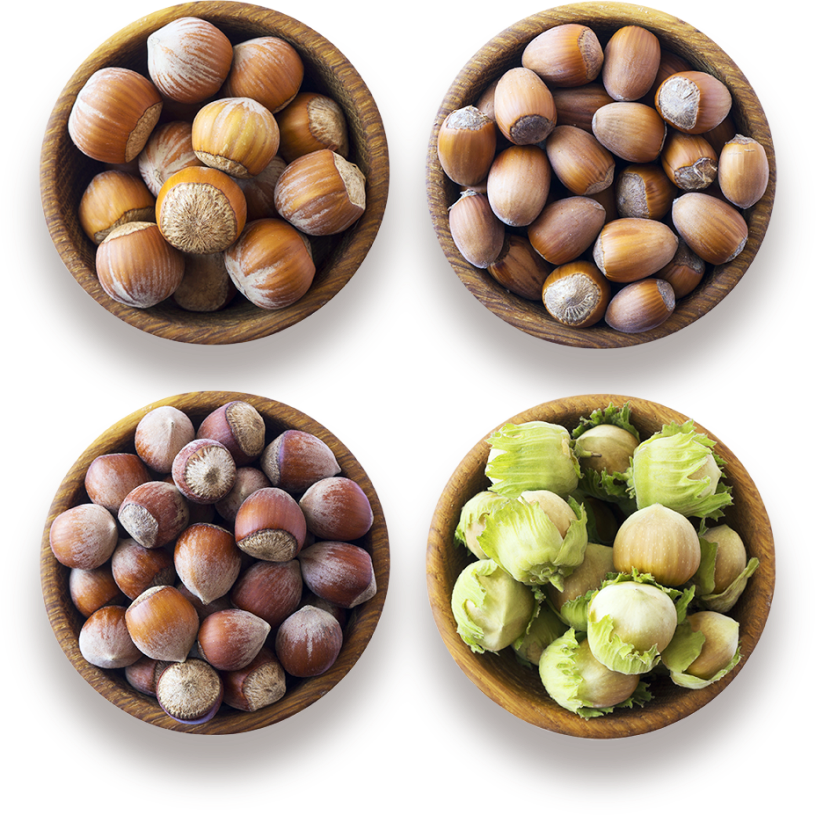
- Formats: currently mainly in-shell; further processing (shelled/blanched/granulated/paste) available on request or on the roadmap.
- Quality: always evaluate moisture, mold risk, rancidity and size; defects explain much of the variation between batches.
- Prices: driven by season, yield, availability, sorting/conditioning and logistics (Italy/EU/export).
Quality & defects: how to read a batch
Hazelnut quality isn’t just ‘good’ or ‘bad’: it’s a set of technical and sensory signals that determine yield, stability and performance in processing.
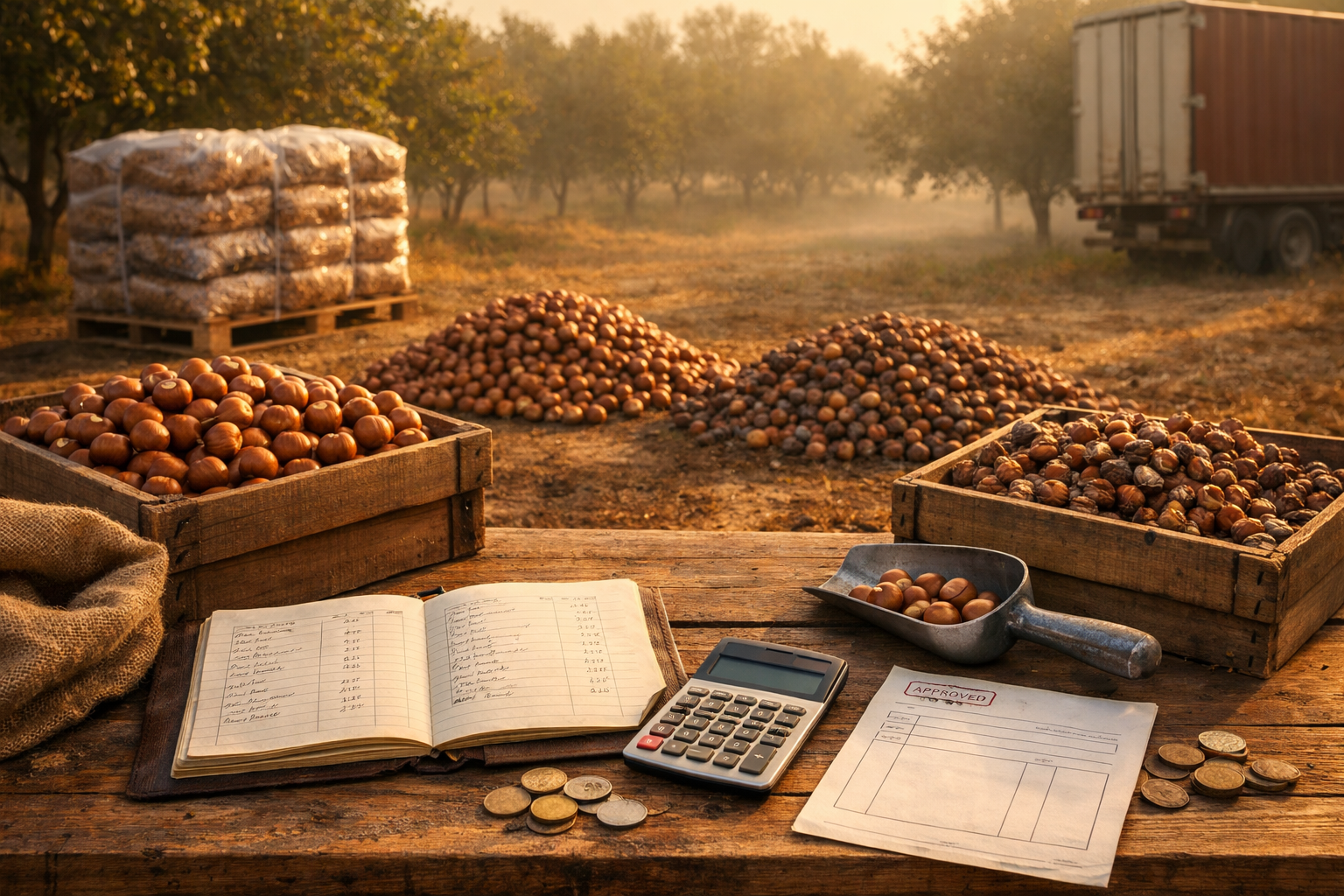
For buyers, the real difference shows over time: a stable batch keeps its aroma and texture; a critical batch tends to deteriorate (off-odors, bitterness, rancid notes) and increases waste. Many common defects are linked to post-harvest handling and storage. Knowing what to look for helps you request meaningful specs and compare offers beyond price alone.
- Moisture: if too high, mold risk increases and shelf-life drops.
- Mold and off-odors: often tied to poor ventilation or storage conditions.
- Rancidity: fat oxidation driven by heat, light and long storage.
- Size and uniformity: affects processing and yield (especially for artisans/industry).
- Cleaning and sorting: foreign bodies and defects impact the real cost of a batch.
- Always ask: indicative moisture, sorting/conditioning, and intended use.
- If you process: specify size standards and defect tolerances.
- Remember: ‘cheap’ can mean high waste.
Storage: stability, shelf-life and good practices
Storage is where quality is preserved—or lost. Even an excellent hazelnut can degrade if stored poorly: uncontrolled moisture and temperature increase mold risk and oxidation.
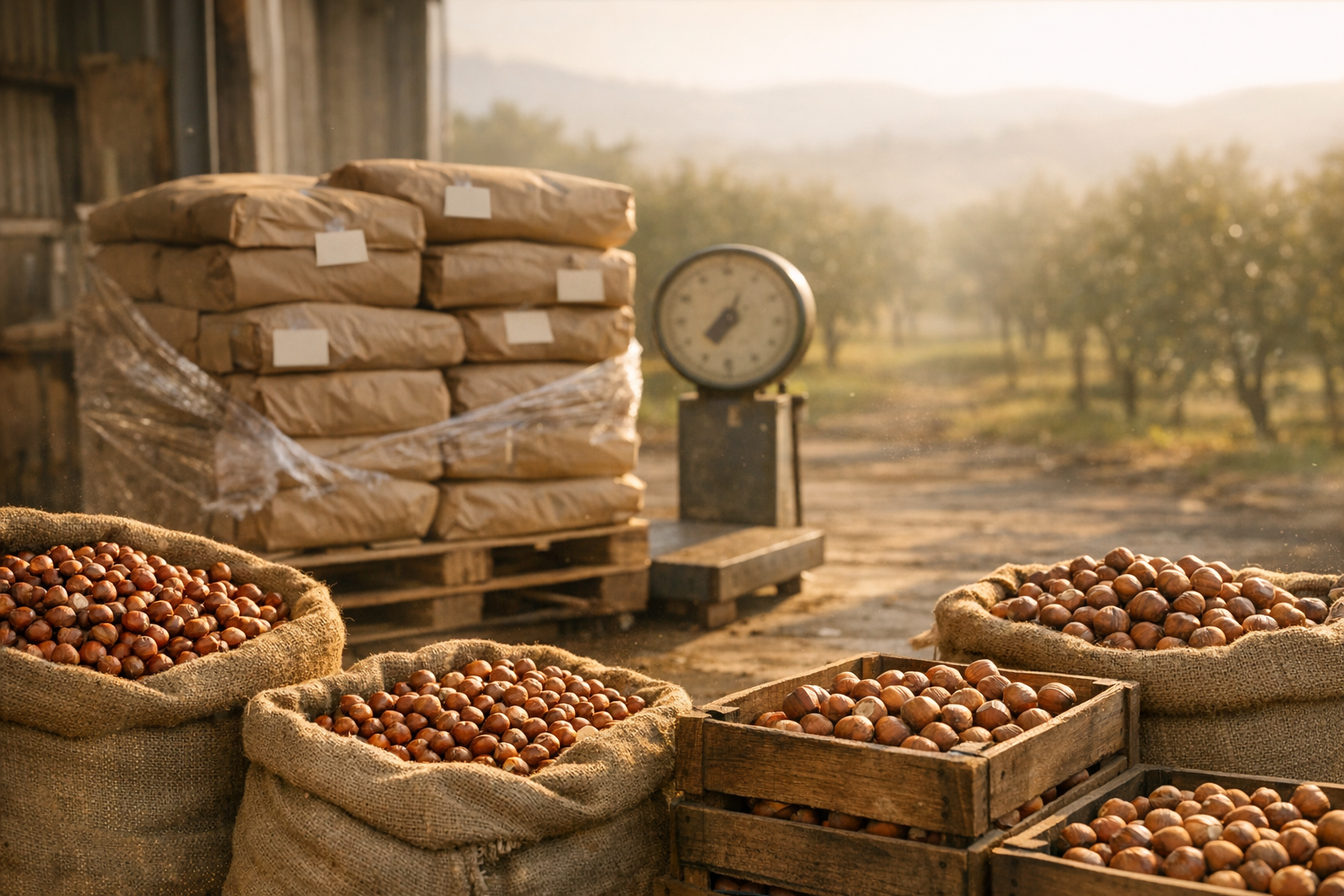
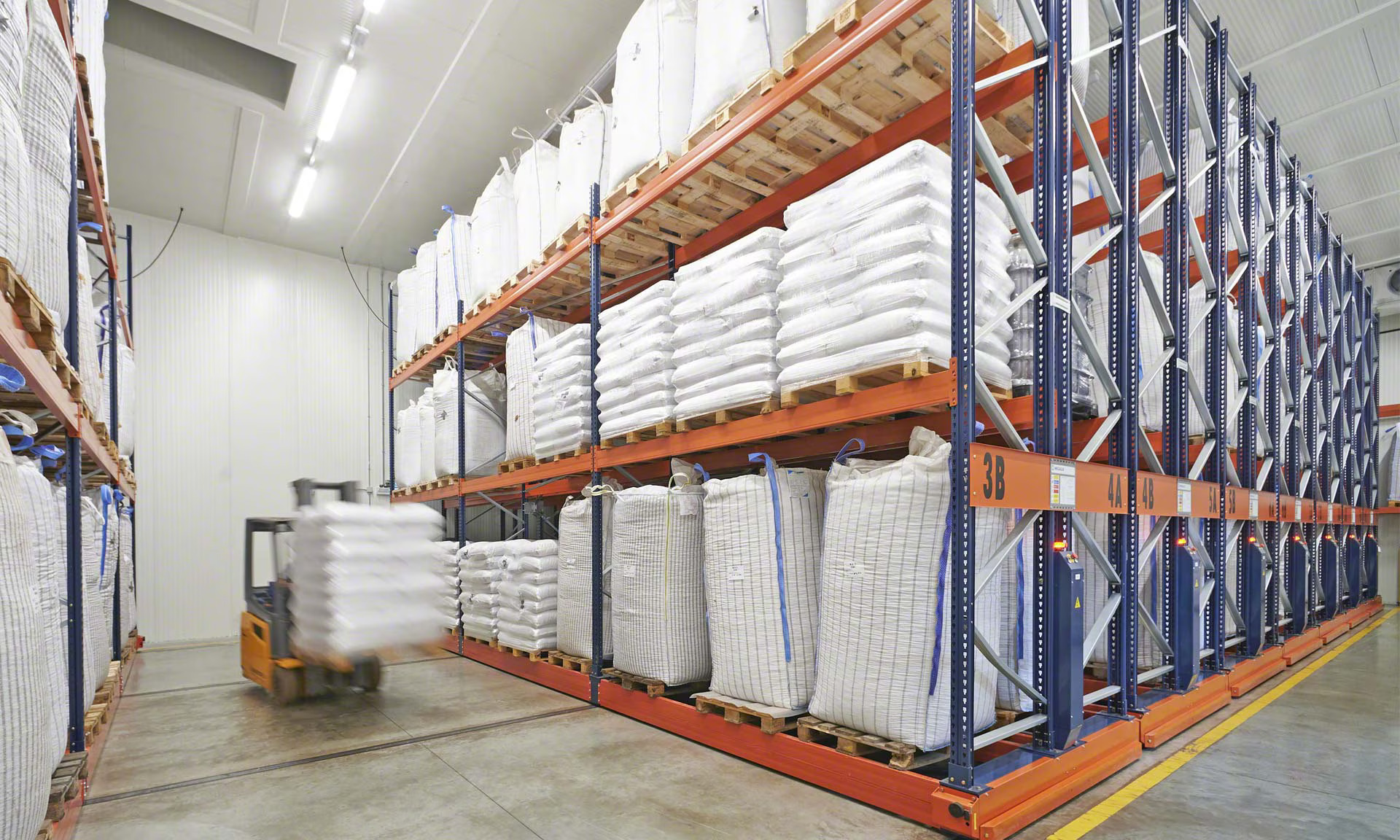
For in-shell supply, best practices focus on stability and ventilation. This section helps you understand what to ask, how to interpret a batch, and which practices reduce issues along the chain.
- Environment: cool, dry, ventilated; avoid heat and swings.
- Protection from light/odors: hazelnuts absorb odors and oxidize faster in poor conditions.
- Time: the longer it’s stored, the more critical moisture/temperature become.
- Checks: periodic visual/olfactory inspection (stale, moldy, rancid notes).
- Packaging/logistics: proper palletizing, ventilation and protection in transport.
- If shipping: state destination, lead times and transport conditions.
- Ask how post-harvest was handled (cleaning/conditioning).
- ‘Stability’ matters more than ‘freshness’ without data.
Market & prices: what really drives them
Hazelnut prices aren’t fixed: they reflect season, availability, demand, average quality and logistics. Some seasons are driven by unstable harvests; others by industrial demand or export dynamics.
Smart buying looks beyond ‘€/kg’: what matters is the cost of usable quality. This section helps you read common signals and request quotes that are actually comparable.
- Season and yield: quantity and quality change year to year.
- Availability by batch: not everything is continuous; windows and volumes matter.
- Sorting/conditioning: more control costs more, but often means less waste.
- Logistics: destination, timing, packaging and transport affect the total.
- End use: artisan vs industrial changes requirements and final price.
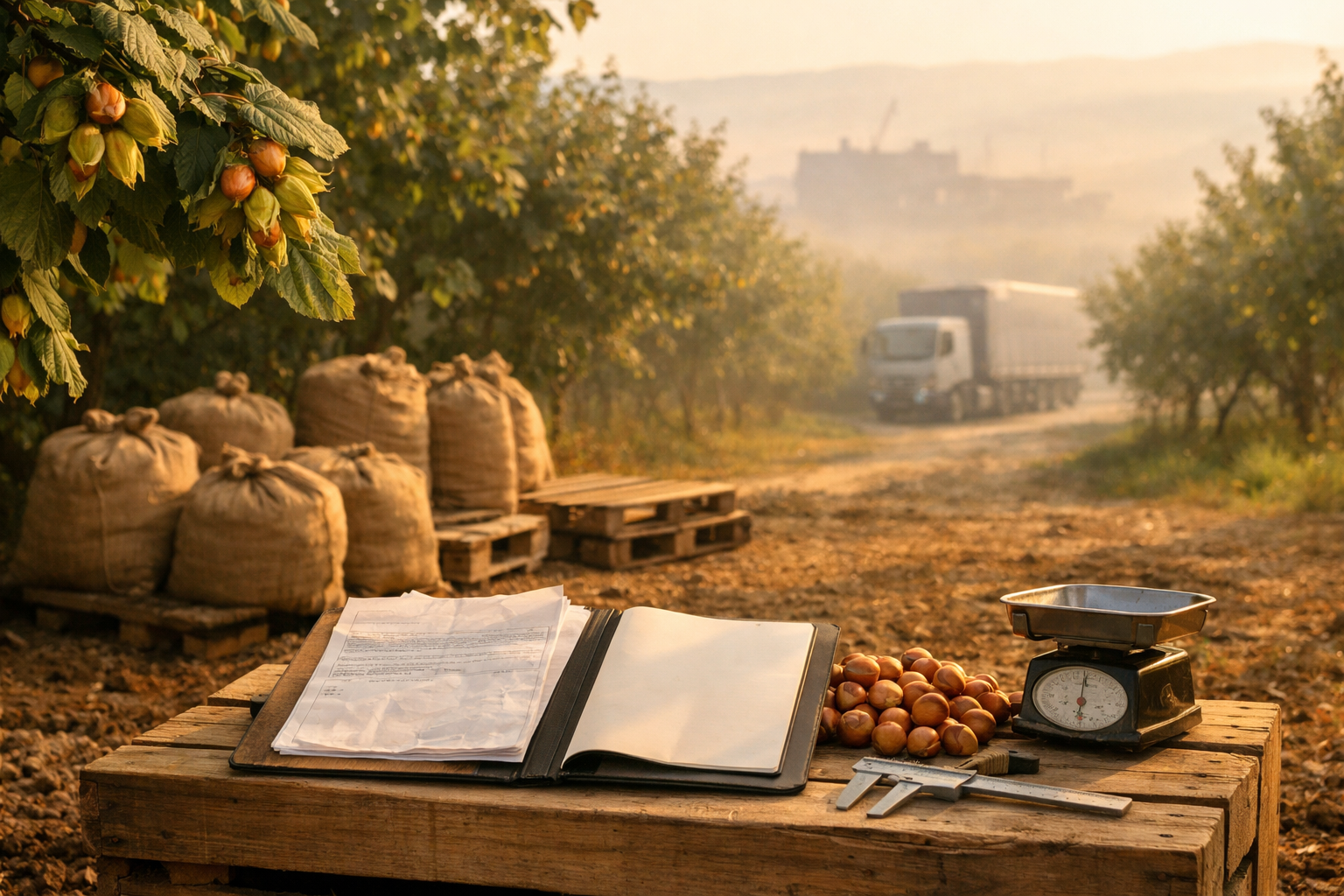
- In your RFQ always include: quantity, destination, use, and sorting requirements.
- Use clear specs: vague requests mean non-comparable quotes.
- Real cost = price + waste + quality risk.
Production & harvest: seasonality and what changes
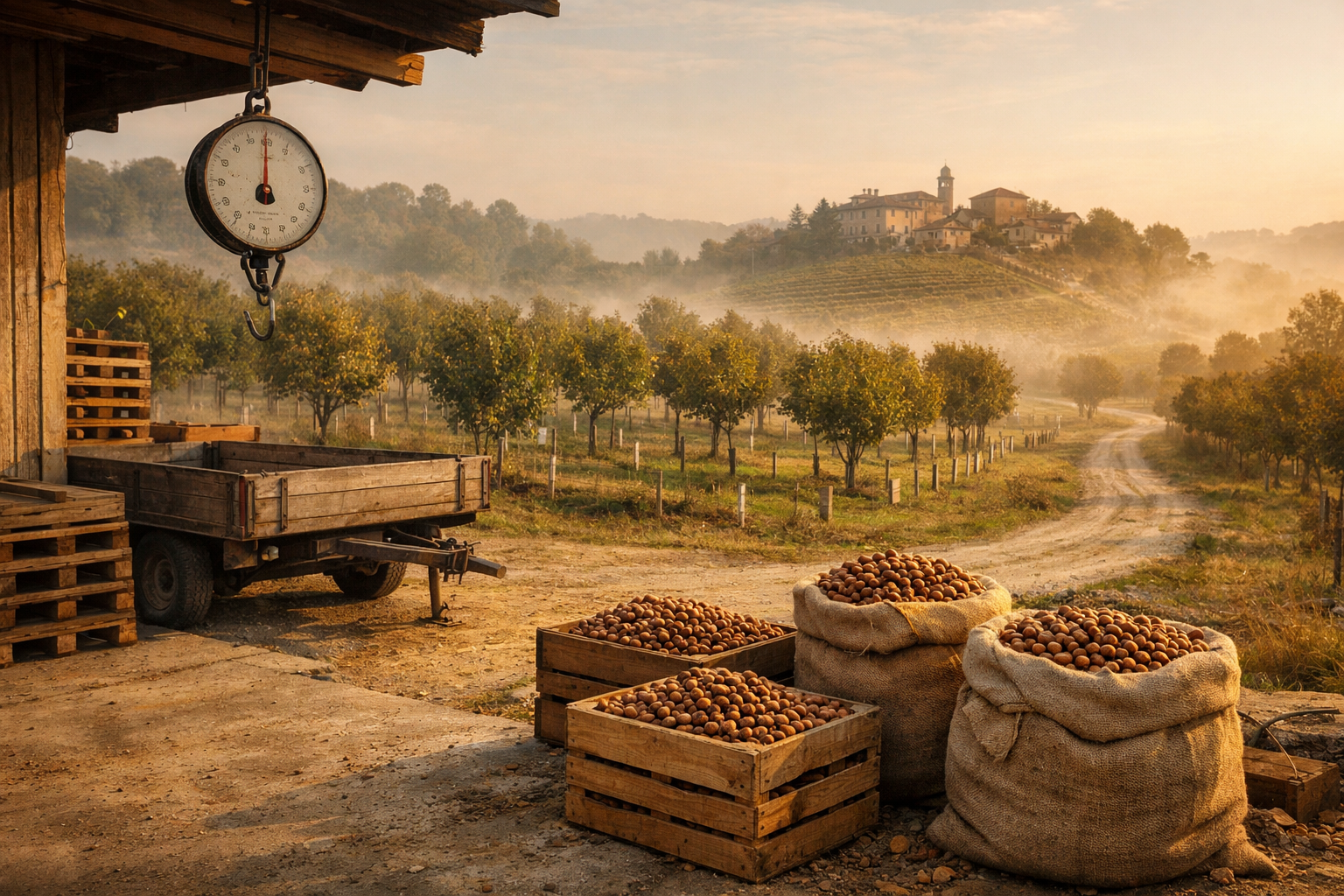
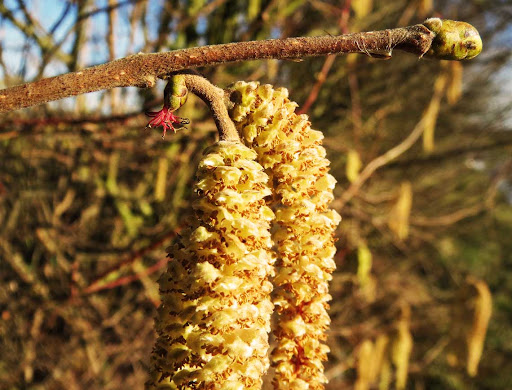
To understand quality and availability, you need to understand what happens in the orchard and after harvest. Season affects moisture, size and stability; post-harvest (cleaning/conditioning/storage) drives many defects.
For buyers, knowing seasonality helps planning: when to request, when batches are available, and which variables most often impact supply.
- Seasonality: availability follows harvest and subsequent processing.
- Variability: climate and management influence size and stability.
- Post-harvest: cleaning, possible drying/conditioning, sorting.
- Batch traceability: supports consistent quality and defect control.
- Planning: for B2B volumes, move early.
- Plan purchasing windows and indicative MOQs.
- If you need continuity, ask for batch planning and sorting criteria.
- Prefer batch-based supply with traceability.
Health & consumption: practical guidance (no myths)
Hazelnuts and other nuts are often associated with an interesting nutritional profile (healthy fats, fiber, micronutrients). This section is informational: it doesn’t replace medical advice, but helps with practical choices (portions, added sugars, salt, roasting).
- Portions: consistency and reasonable amounts.
- Format: prefer no added sugars and not overly salted.
- Home storage: protect from heat and light to limit rancidity.
- Allergies: pay attention to individual sensitivity (serious topic).
- Sensory quality: off-odors/rancid notes = avoid.
- If selling for food use, sensory stability is part of the value.
- Storage stability is ‘quality’ as much as aroma.