
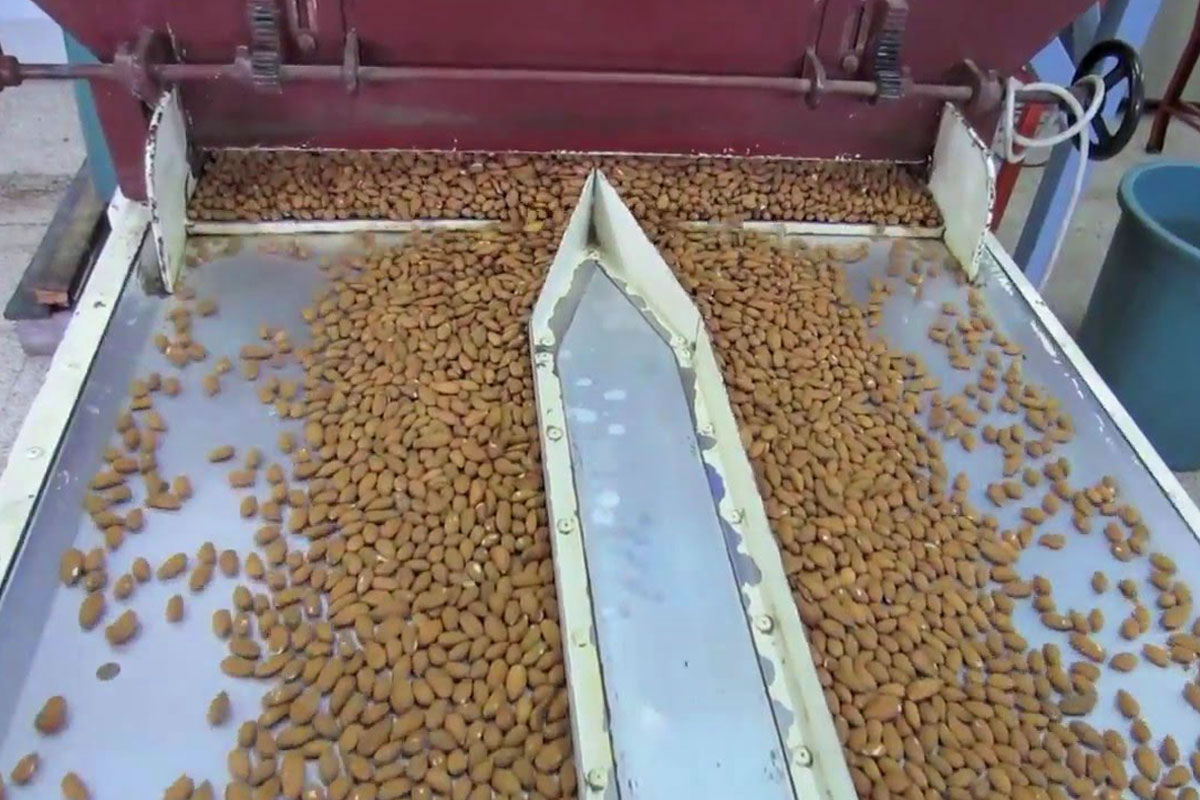
Tuono almond shelling yield: sizing and B2B specification requirements is one of the topics that most often causes misunderstandings between buyers and suppliers: “yield” can mean different things (kernel weight, breakage rate, rejects due to defects), and without clear parameters it’s hard to compare offers and lots correctly.
Below is a practical approach to defining measurable parameters, tolerances, and inspection methods that are useful in a B2B product specification, with a focus on the Tuono almond variety (a cultivar widely grown and traded in Italy).
What shelling yield can you expect for the Tuono variety, and what factors does it depend on?
For “shelling yield” in a B2B context, it’s best to distinguish at least three concepts, because they affect price and disputes:
- Kernel outturn (kernel/shell yield): how much shelled almond you obtain starting from in-shell almonds, on an equal-weight basis.
- Commercial yield: kernel/shell yield minus rejects due to defects (damaged kernels, immature kernels, mould, foreign matter, etc.).
- Usable yield for your line: commercial yield minus rejects specific to your process (for example, the maximum breakage allowed if you need “whole” kernels, or a wider tolerance if you’re producing flour/paste).
For Tuono, the actual yield you’ll see in practice mainly depends on:
- Condition of incoming product: well-dried and stable almonds vs “green” product or uneven moisture.
- Size grade and lot uniformity: more uniform lots tend to shell with fewer breaks and require fewer machine adjustments.
- Shelling settings and technology: overly aggressive settings increase breakage; overly conservative settings increase “unshelled” product or rework.
- Kernel fragility: influenced by maturity, drying, and storage (thermal shocks and handling increase micro-cracks).
- Presence of defects: empty, shrivelled, insect-damaged, or otherwise altered kernels may weigh less or break more, reducing commercial yield.
In a specification, the key point is to define exactly which “yield” you mean and how it is measured, so both parties are aligned.
How does size grade (in-shell and shelled) affect yield, breakage, and cost/kg for industry?
Size grade is the variable that directly links yield, breakage, and cost/kg.
In-shell size grade
- An in-shell lot with highly variable size forces compromises in machine settings: to open larger shells you risk breaking more kernels from smaller ones.
- Uniform in-shell sizing helps stabilise the line: fewer stops, less rework, less waste.
Shelled size grade (kernel size)
- If your specification requires whole kernels, a larger and more uniform size grade tends to add value, but it is also more sensitive to breakage if shelling is not optimised.
- If the end use is pieces, flour, or paste, you can accept a higher share of breakage and a less “premium” size grade, as long as defects and contaminants are controlled.
Impact on cost/kg
The true cost for industry is not just €/kg purchased, but €/kg usable. To compare offers, use a simple formula:
- Cost per usable kg ≈ Price (€/kg) / Usable yield
Where “usable yield” must be defined using the same criteria for all suppliers. This is where Tuono almond shelling yield: sizing and B2B specification requirements becomes central: without a single, shared definition, the price/yield comparison is distorted.
What specifications to include in a B2B product spec: moisture, defects, foreign matter, breakage, and tolerances
An effective specification separates:
- Food safety and compliance requirements (non-negotiable, with test methods)
- Commercial requirements (negotiable, with tolerances)
Below are the most commonly used items, to be adapted to your process.
Moisture
- Specify a range and, above all, the measurement method (instrument, temperature, sample preparation).
- Add a note on uniformity: lots with an acceptable average moisture but high variability can cause problems in shelling and shelf life.
Kernel defects
Define categories in an operational way (with photos/appendix):
- Shrivelled/immature
- Damaged (mechanical or insect damage)
- Altered (off-odour/off-flavour, rancid, visible mould)
- Stained or abnormal skin (if relevant to your finished product)
For each category: state a maximum limit and tolerance (and whether the limit is by weight or by count).
Foreign matter
- Specify “absence” for critical foreign matter (glass, metal) and define required controls (e.g., end-of-line metal detector, magnets, sieves).
- For non-critical foreign matter (shell fragments, small stones), define a limit and, above all, how it is measured (sample inspection, sieving, etc.).
Breakage: whole, broken, fragments
Clarity is essential here because “breakage” strongly affects value:
- Define classes (e.g., whole, broken, fragments/dust) with a size threshold or a practical criterion (reference photos).
- Indicate the maximum percentage for each class depending on use (snacks/coated products need more whole kernels; processing can accept more broken kernels).
Tolerances and non-conformance handling
- Include a “lot tolerances” section (what is acceptable) and “non-conformance” (what triggers rejection or downgrading).
- Define the management rule: replacement, credit note, price downgrade, rework.
This is the core of a well-written Tuono almond shelling yield: sizing and B2B specification requirements: not only limits, but measurable criteria and consequences.
What methods and sampling plans to use to measure yield and size grade in a repeatable way (lot, AQL, report)?
To make checks repeatable, you need three elements: lot definition, sampling plan, standard report.
Lot definition
- Identify the lot by: origin/plot (if available), shelling or packing date, line/shift, total weight.
- Avoid overly large, mixed lots if you want to link yield and defects to a root cause.
Sampling and AQL
In many B2B contexts an AQL (Acceptance Quality Limit) approach or equivalent plans are used: it doesn’t need to be complicated, but it must be written down:
- Number of increments (sub-samples) taken across the lot
- Total weight of the aggregated sample
- Acceptance/rejection criteria for each parameter
If you don’t want to reference AQL, you can still define a “minimum plan” (e.g., a composite sample from multiple takes) and an acceptance threshold.
Test report
Request a report that always includes:
- Lot ID
- Sampling method and date
- Results for: moisture, size grade, breakage, defects, foreign matter
- Sample photos (useful to align interpretations)
- QC signature/responsible person
How to compare different offers and lots: actual yield vs declared yield, rejects, and processing standards
To compare correctly:
- Align definitions: kernel/shell yield is not commercial yield. Require the supplier to state what they mean.
- Ask for yield on both a sample basis and an industrial basis: test yield can differ from line yield (settings, speed, optical sorting, etc.).
- Separate raw material price from processing cost: a cheaper lot with more breakage and rejects can cost more at the end of the process.
- Assess consistency: one “good” lot is not enough. Ask for a qualitative history of consistency and lot-to-lot variability.
- Declared processing standards: shelling, sizing, sorting, dust aspiration, metal control. You don’t need brands or promises—just a description of the process.
When comparing, reduce everything to a single indicator: €/kg usable for your application. It’s the most robust way to interpret Tuono almond shelling yield: sizing and B2B specification requirements without being misled by “nice” numbers that aren’t comparable.
Final checklist for buyers: supplier questions and technical attachments to request before ordering
Key questions
- How do you define “yield” (kernel/shell, commercial, usable)? What do you include in rejects?
- What is the declared size grade (in-shell and/or shelled) and what method do you use to measure it?
- What is the maximum breakage percentage (whole/broken/fragments) guaranteed per lot?
- Which defects do you control and with what limits? Do you have a defect atlas with photos?
- What foreign-matter controls do you use (sieves, aspiration, magnets, metal detector) and where on the line?
- How do you handle non-conformances: replacement, downgrading, credit note? Within what timeframe?
- How is the lot composed (homogeneity, harvest/shelling period, any blending)?
Technical attachments to request
- Product data sheet with definitions and limits
- Sampling plan and acceptance criteria
- Lot analytical report (moisture, defects, breakage, size grade)
- Lot traceability and process declaration (shelling, sorting, controls)
- Packaging specification and recommended storage/transport conditions