
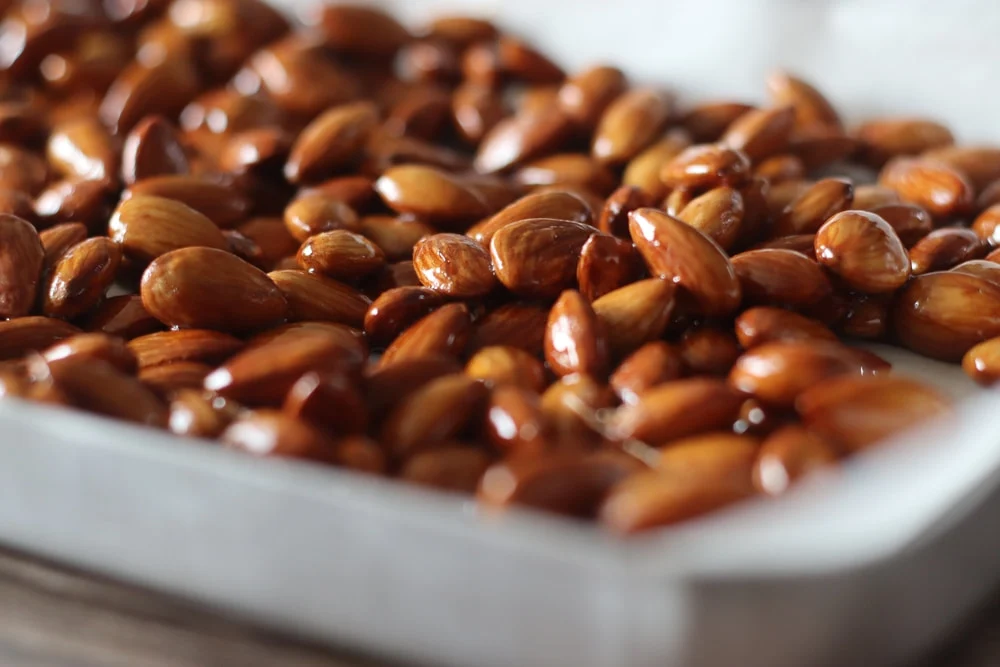
Almonds have a “good” reputation and often deserve it. The problem arises when consumption becomes a sum of shortcuts: covering products, distracted storage, roasting used as an excuse not to look at signals. If you want to stay practical, the right question isn’t “are they good for you?” but “what am I really eating, and how much remains stable over time?”.
The Italian Guidelines, when talking about shelled nuts, insist on two ideas that seem obvious but aren’t: small quantities and preference for “natural” products. The crucial phrase is that some products are salted or glazed and this can negate the beneficial properties. In other words, the nutritional quality that interests you becomes harder to defend if you start from a food already “transformed” for taste.
From here opens a theme that online is almost always treated poorly: stability. Nuts are rich in lipids and lipids change. In the technical literature on nut storage, oxygen, temperature, humidity and light exposure are indicated as main factors driving lipid alteration, with particular sensitivity when the product is shelled or broken. This isn’t a warehouse detail: it’s what decides if an almond remains clean to smell and taste or slides toward tired and rancid notes.
There’s a useful curiosity that makes this immediate: physical protection matters. When lipids are no longer protected by intact membranes, they can come into direct contact with oxygen and disperse over a wide surface. Translated into kitchen language: the more you “break” the system that protects the fat, the more you increase exposure and the easier it becomes to lose quality. That’s why, with equal origin and year, a whole almond tends to behave differently compared to chopped or broken product, if time and environment aren’t impeccable.
Then there’s a second theme, even more underestimated than rancidity: foreign odors. Nuts, due to their high fat content, can absorb foreign volatile compounds with negative repercussions on odor and flavor. And the most interesting part, because practical, is this: aromas absorbed by the product are intensified in the raw fruit and enormously emphasized in the roasted seed. This explains two things that many attribute to “personal tastes”:
- an almond can be unpleasant without necessarily being “rancid” in the common sense, if it has breathed the wrong environment;
- roasting can become a magnifying glass, bringing out aromatic deviations that were less readable when raw.
If you consume almonds regularly, the smartest gesture isn’t seeking the most aromatic product, but protecting the normal one. “Natural” and stability go together: less coverage and less interference, more readability of signals. In practice, smell becomes a serious check. If a note appears that you don’t recognize as typical, and especially if you smell rancid or mold, it’s not a nuance: it’s a boundary.
On allergies, one sentence is enough, because it’s one of the few truly decisive ones. In institutional documents it’s said that, for nuts, these are stable proteins not denatured by the heat treatments to which these fruits are commonly subjected. Therefore roasting is not a “solution” for those who are sensitive. It’s a dangerous myth because it gives a false sense of security.
One last bridge, useful also for those who buy for food destination: sensory stability is not an aesthetic detail, it’s a condition of value. If a product absorbs odors or loses cleanliness over time, perceived quality declines. And when perceived quality declines, the risk of returns and reputational damage becomes a real issue, even before a technical one.
Suggested internal links in guide
Almond storage: how to protect aroma and shelf-life
Quality and defects: what to check in an almond batch