
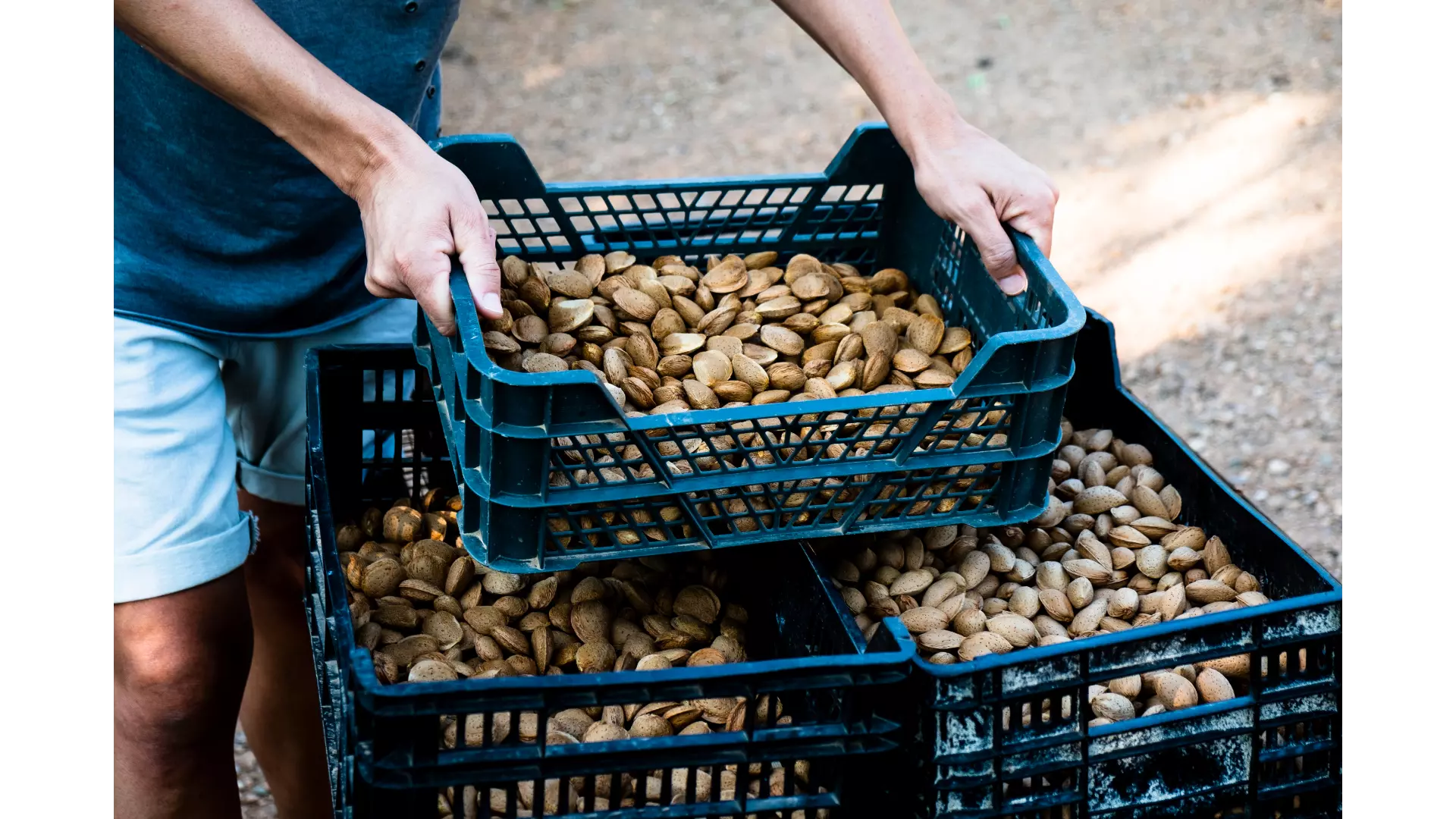
When we say “quality” about an almond batch, we’re often mixing three different things: how it looks today, how it will behave tomorrow, and how much variability you’ll carry bag after bag. For a buyer, the keyword is predictability; for an end customer, it’s trust in taste and sensory cleanliness. In both cases, quality is not an adjective: it’s a set of signals that are read methodically.
A useful point, before entering defects: there is also a positive idea of quality, not just “absence of problems”. In technical literature you find a very concrete description: quality almonds with white and smooth kernel, typical aroma and pronounced taste. It’s a simple phrase, but it reminds you what you’re looking for: sensory identity and consistency.
The main risk is not “the defect”, it’s its dynamics
Many problems come from post-harvest management and storage: non-optimal conditions accelerate fat oxidation and increase mold risks. The interesting part is that these two strands move over time. A batch can be “acceptable” on arrival and become critical after a few weeks if stability is already fragile or if the buyer’s storage is not consistent.
Here enters an essential technical fact: oxygen, temperature, humidity and light exposure are key factors in lipid alteration phenomena, and become even more sensitive when we talk about shelled or broken product. Translated: the more you increase the “exposed” surface and the more the importance of management grows.
And there’s another idea that generally online is missing: stability is not equal by definition. Oxidability also depends on fatty acid composition, which is influenced by species and variety. This is not for marketing, it’s for reading comparisons well: two batches can have the same commercial name, but not be identical in “holding” over time. Those who work with a specific cultivar, like Tuono, have an advantage: they can build over time a sensory and stability baseline, and recognize earlier when a batch “deviates”.
A practical control that works for both B2B and consumption
The most common mistake is evaluating a batch as if it were a single block. In practice, a batch is a set of micro-batches: different pallets, different bags, different exposures. For this it’s better to reason as an input control: simple but repeatable sampling, and recording of what emerges.
If you want a dry (and replicable) approach, these are the five controls that really make a difference:
- Sensory identity: white and smooth kernel, typical aroma, pronounced taste; here you see if “they are almonds”, not just “they are edible”.
- Anomalous odors and notes: mold or rancid are not nuances, they are critical signals; if they appear, useful quality is already compromised.
- Seed integrity: breakages and defects affect processing yield; and they also increase sensitivity to lipid alteration.
- Cleaning and selection: foreign bodies and waste increase the real cost of the batch; and they make control more difficult (because they “mask” signals).
- Stability: key question is not “how is it today”, but “does it hold my usage window?”; here management and consistency over time count.
This list seems “trivial” only until you apply it operationally. The difference is in the how.
How to recognize rancid without being fooled
Rancid is not always immediate, especially on whole and unroasted almond. Here method helps more than instinct.
- Smell the container first and then the product: bag, cardboard, pallet can tell more than the seed.
- Break some seeds: often the “real” odor is internal and is released with the fracture.
- If the final use involves roasting, do a micro-test: certain defects become more readable when the product is heated.
There’s a technical reason behind this prudence: storage must be done in clean warehouses free from foreign odors, because dried fruit can absorb foreign volatiles; and absorbed aromas can result more evident in raw fruit and even more emphasized in roasted seed. This is an underestimated point: you don’t need evident “contamination” to lose quality, just a wrong environment. Even when the almond is not “defective” in the strict sense, it can become unsellable for aromatic deviation.
Molds, mycotoxins and why the topic is concrete
The buyer often asks: “Ok, but how much should I really worry?”. The useful answer is not alarmist, it’s realistic: in control and alert reports, dried fruit is among categories where border rejections for mycotoxins recur, with prevalence of aflatoxins and ochratoxins. It doesn’t mean every batch has a problem, it means the risk exists and is intercepted when present.
In practice this changes the attitude: every mold signal must be treated as a serious issue, not as “warehouse smell”. And above all it must be managed before the product enters your usage window, because a dispute on contaminants is not comparable to an aesthetic defect.
”Quality” as common language between who buys and who consumes
A good article for a guide must also speak to those who buy few packages, not only to those who buy pallets. The meeting point is simple: quality is a sensory promise that must hold over time.
For the final customer, this translates into concrete choices: prefer intact packages, avoid exposure to heat and light at home, and trust the nose when “tired” notes appear.
For those who buy to transform or resell, the same thing becomes a real cost rule: price + waste + quality risk. It’s not theory, it’s the fastest way to avoid “saving” on the kg and paying later in returns, rework or reputation loss.
Suggested links For post-purchase management: Almond storage: how to protect aroma and shelf-life